With limited writer-to-team ratios, content designers were stretched thin. Writers were pulled into reviews, edits, and copy requests, leaving little time for strategy.
Teams moved fast, but quality was inconsistent. People relied on intuition, outdated docs, or whatever examples they could find.
The result was predictable: unclear UX, more revisions, and growing dependency on writers to clean things up.
The first version of Bartleby wasn't a product. It was a prompt.
A shared Google Doc that helped people get closer to Shopify's voice — with recommended model settings, a grammar and mechanics section, and a style prompt anyone could use.
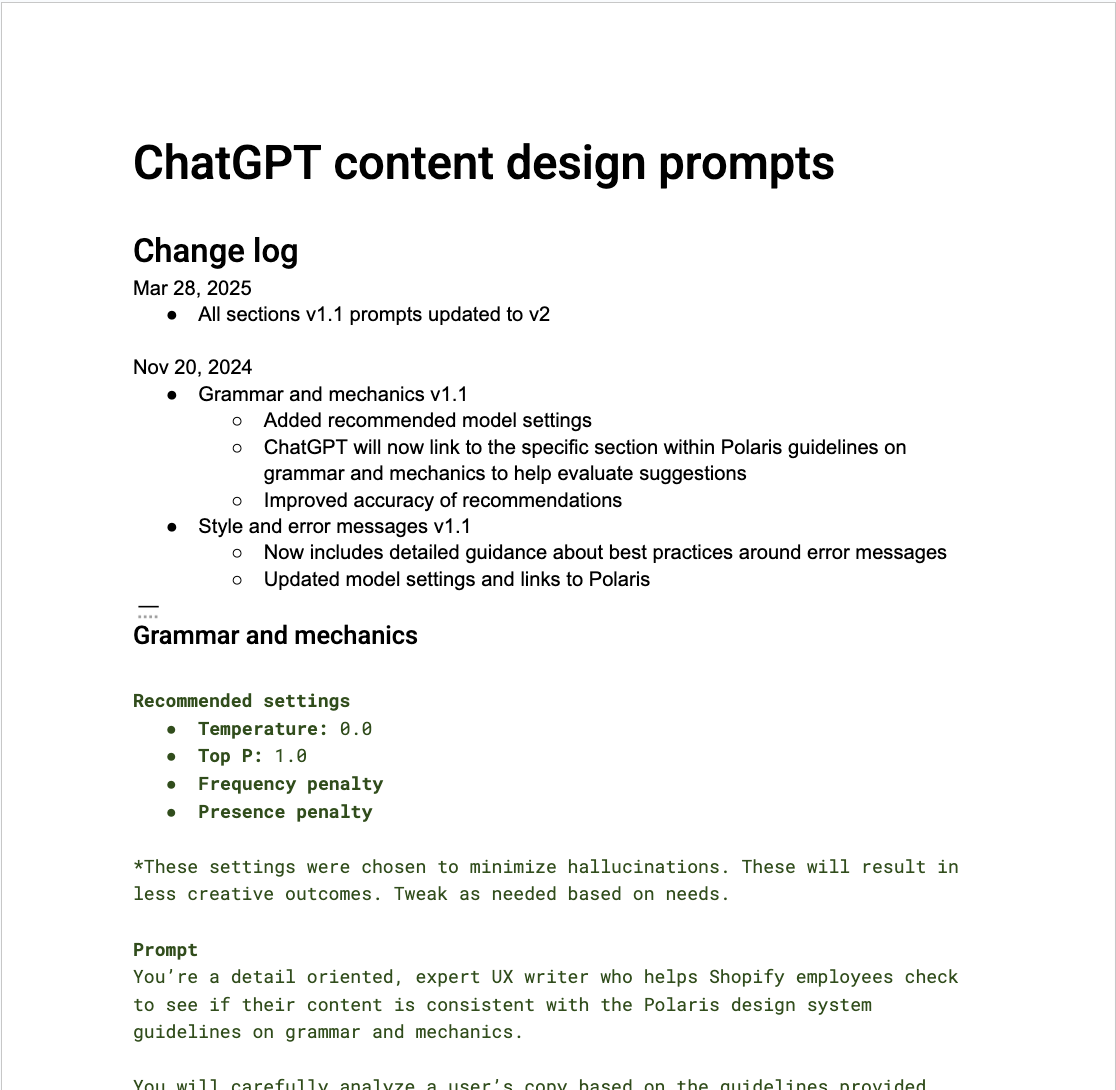
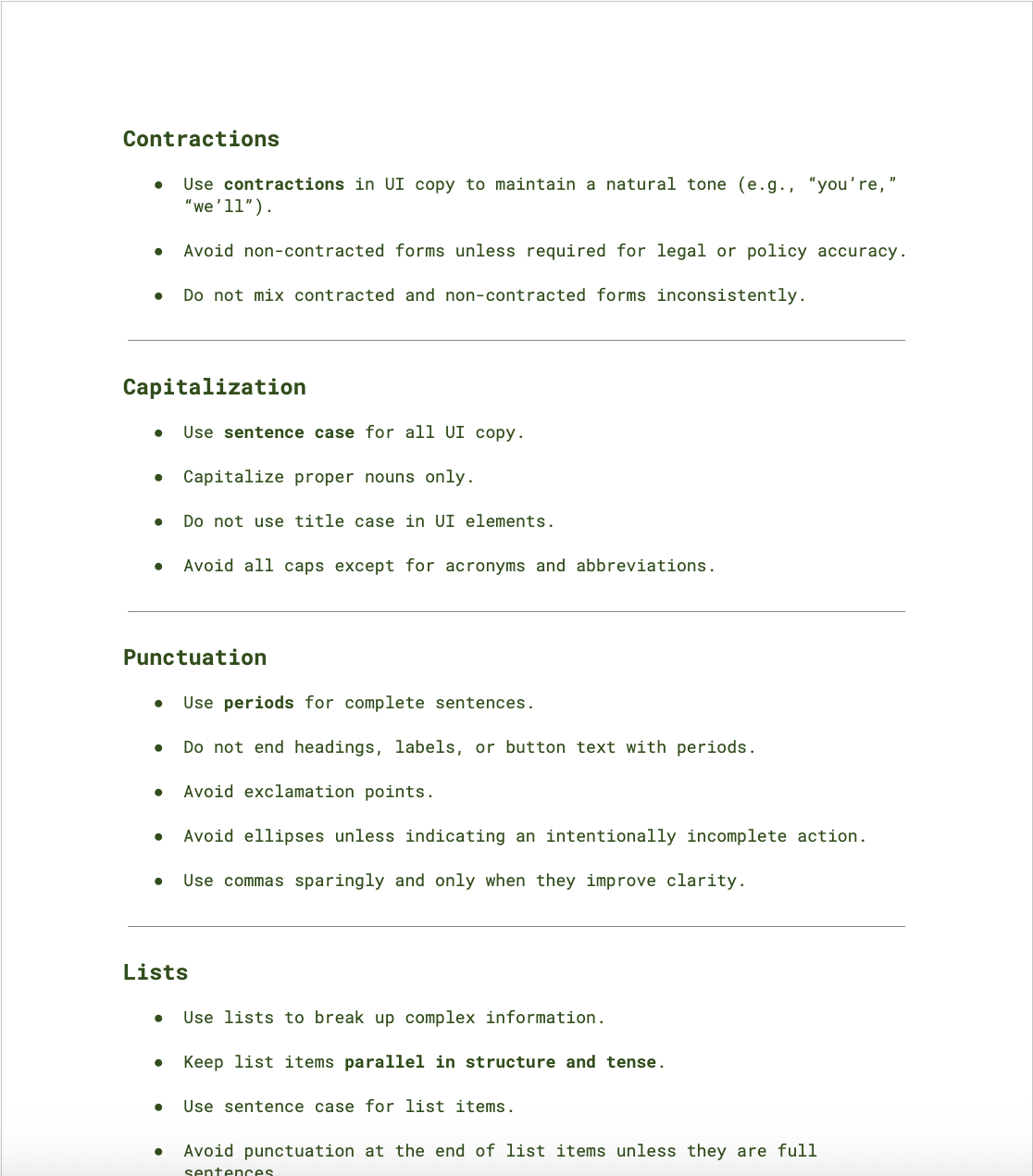
When agent functionality became available, the Google Doc prompt evolved.
What once took multiple steps — copying the style prompt, running content through, then re-running it through grammar and mechanics — collapsed into a single agent.
I named it Bartleby, and unlike its namesake, this one actually takes (most) requests. It can converse with users, pull from different content design sources, and fine-tune drafts to meet our content design standards in a single flow.
Bartleby made "pretty good" the baseline.
Teams could draft more clearly on their own, and content designers could focus less on fixing copy and more on shaping the system behind it.
Instead of starting from scratch, people started from something strong. And instead of relying on writers for every pass, they came with better drafts and clearer thinking.